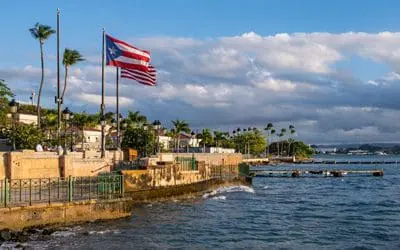
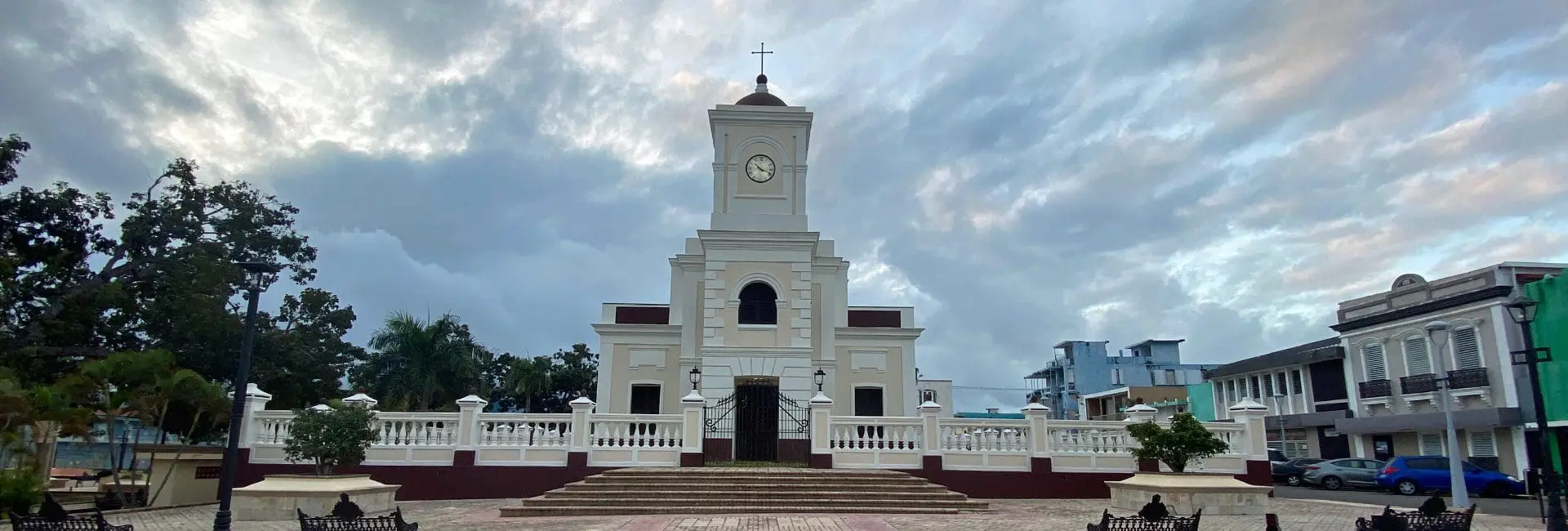
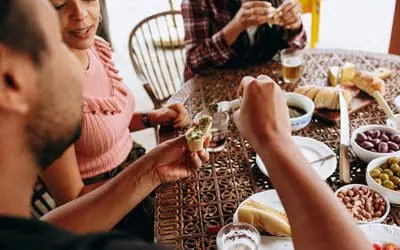
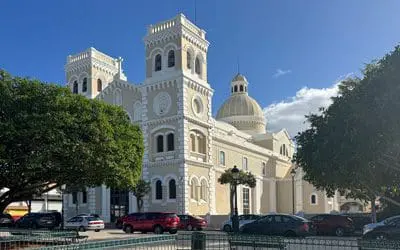
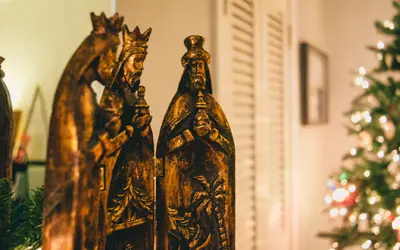
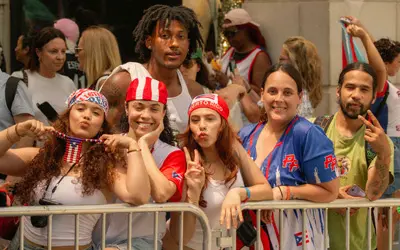
Three roots – Taíno, Spanish, and West African – braided together over 500 years into something distinct from all of them. The result is a warm and unique culture worth exploring. History here is not behind glass. It is in the Sunday table, the town square, and the way a stranger greets you. These are the cultural defaults that the long story above produced, and that you will feel from your very first hour on the island. Outside the largest cities, the extended family and the multigenerational household remain the norm rather than the exception. Grandparents, parents, and children often share one home or one street, and the great Sunday gathering, with its slow cooked food, loud conversation, and open door, is a central social ritual. Holiday cooking, especially the roasted lechón and the labor of love that is pasteles at Christmas, binds the generations together. To be welcomed into a Puerto Rican family gathering is to be handed the real key to the island. Nearly every one of the island’s towns is built around a central plaza facing a Catholic church, a plan inherited directly from the Spanish colonial era. Historically, and still today, this square is the social and civic heart of daily life. It is where people stroll in the cool of the evening, where children play, where elders talk, and where the community erupts into celebration during the fiestas patronales, the annual patron saint festivals that give each town its own signature party. Puerto Rico is predominantly Roman Catholic, a legacy of the Spanish centuries, with a large and growing Protestant evangelical presence. Faith is woven into public life, and religious processions and saints’ days shape much of the island’s festival calendar, from Three Kings Day in early January to the patron saint celebrations that roll through the towns all year long. Warmth toward guests is not an occasional courtesy here, it is the cultural baseline. Expect expressive, animated conversation, generous invitations, and physical affection, including the customary greeting of a single kiss on the cheek. Visitors are consistently struck by how quickly they are treated not as tourists, but as guests. This openness, part Caribbean, part Latin, part uniquely Boricua, is one of the most cited reasons people fall in love with the island and never quite leave. Finally, there is that remarkable double heart. Puerto Ricans hold full U.S. citizenship and, very often, a deep and passionate patriotism toward the island itself, held at the same time and without contradiction. Competing at the Olympics as “Puerto Rico,” waving the single starred flag that was once banned under colonial law, and defending the honor of la isla del encanto, the Island of Enchantment, are all visible expressions of an identity that five hundred years of history made, and that no single flag has ever been able to contain. Continue to Folklore and Music to learn how these roots show up in stories and sounds, and find every celebration mentioned above in our Festivals and Events guide.
Family: The Center of Everything
The Plaza Tradition: The Heart of the Town
Religion: The Rhythm of the Calendar
Hospitality: Warmth as a Default
National Pride and Dual Identity