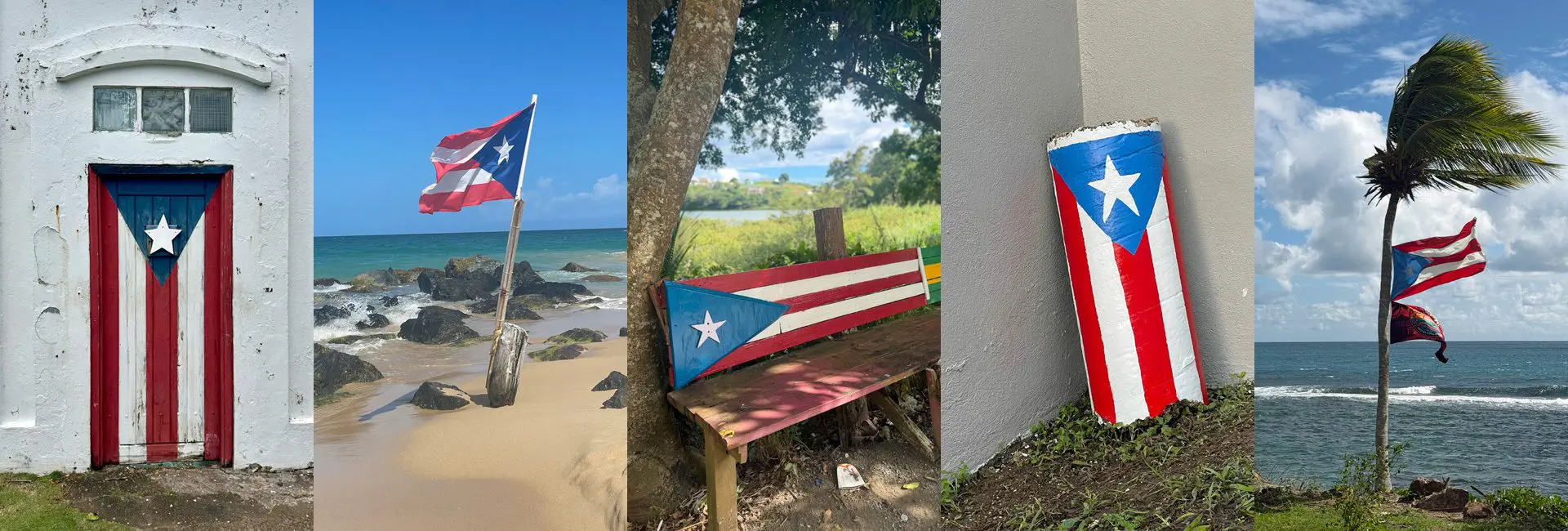
Puerto Rico is a U.S. territory, so mainland Americans can visit or relocate without a passport, currency exchange, or roaming charges — while still experiencing a Spanish-speaking culture with its own flag, Olympic team, and 500 years of distinct history. As a result, the island is gaining popularity. Both English and Spanish are spoken across the island.
Puerto Rico is a Caribbean archipelago of about 3.2 million people, organized as an unincorporated territory of the United States with commonwealth (Estado Libre Asociado) status with its capital in San Juan. The main island is roughly 100 miles long and 35 miles wide – about the size of Connecticut – plus the inhabited islands of Vieques and Culebra and dozens of smaller islands and cayos.
The island has unique and surprising geography. More than 60% of the island is mountainous, split across four ranges. The northern karst belt is riddled with limestone mogotes, sinkholes, and cave systems. The northeast holds El Yunque, the only tropical rainforest in the U.S. National Forest System. Three of the world’s rare bioluminescent bays glow off Puerto Rico’s coasts.
Puerto Rico has been a U.S. territory since 1898 and a self-governing commonwealth since 1952, with its own constitution, elected governor, and legislature. Residents are U.S. citizens by birth – but with no voting privileges. The island’s political status (statehood, continued commonwealth, or independence) remains an active, unresolved debate that shapes everything from federal funding to the Act 60 tax-incentive program.
Why Visit?
- Zero border friction
- Five ecosystems in one island
- A 500-year-old city you can walk in an afternoon
- Food and music you can’t get anywhere else
- World-class, uncrowded nature
- Genuine value outside peak season
Convinced?
Start with Trip Itineraries or check Frequently Asked Questions for the basics.