
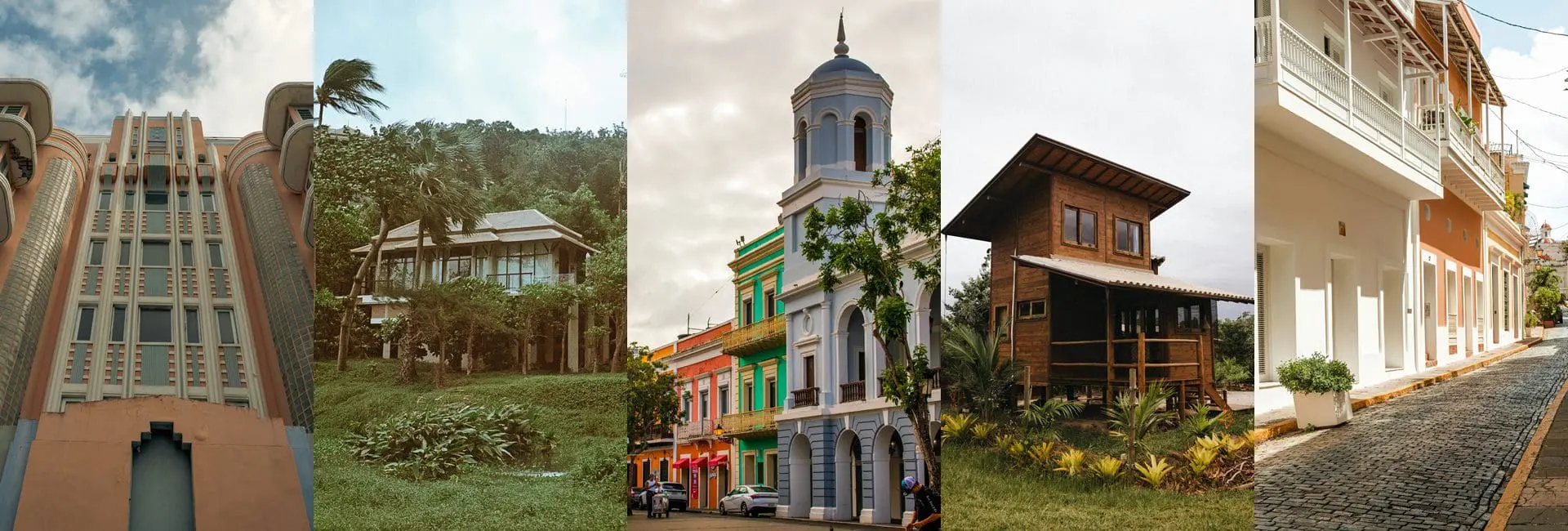
Four Centuries on a Single Block
Puerto Rico is one of the few places in the Americas where five hundred years of building can be read at a glance. For the traveler this means an open-air museum you can touch. Walk a single street in the capital and you pass fortress walls raised against sixteenth century sea raids, breezy townhouses shaped by the tropics, ironwork balconies borrowed from Europe, and the clean concrete geometry of the mid twentieth century. The island did not replace its past so much as build alongside it, and you can see these styles up close at Landmarks and Museums, especially in Old San Juan and Ponce. See why this matters for visitors, residents, and investors.
Spanish Colonial (16th to 18th century)
 This is the island at its most fortified and its most permanent. Spanish military engineers and masons worked in thick masonry, laying walls several feet deep to hold cool interior air and to stand against both cannon and hurricane. The vocabulary is unmistakable: heavy stone and lime, interior courtyards that pull in light and breeze, wooden balconies, and low arcaded galleries. You see it first and best in the defensive works of Old San Juan, above all the great headland fortress of Castillo San Felipe del Morro and the sprawling Castillo San Cristóbal, and in the island’s oldest surviving residences. Chief among them is Casa Blanca, the house built for the family of the conquistador Juan Ponce de León and one of the earliest European homes still standing on United States soil. These buildings were made to outlast their builders, and they have.
Criollo (18th to 19th century)
 As generations were born on the island rather than sailing to it, the imported Spanish model was quietly rewritten for Caribbean heat and light. The result, often called the Criollo or creole colonial style, is the postcard image most visitors carry home. Look for tall ceilings that let hot air rise, deep balconies and overhangs that throw shade across the sidewalk, louvered wooden shutters that trade sun for cross breeze, and the famous palette of pastel facades, coral, mango, robin’s egg, and buttercup, glowing along the blue cobblestone streets. This is the residential heart of Old San Juan, and it is exactly the fabric that draws new residents who want walkable, shaded, human scale streets rather than parking lots and glass towers.
Ponce Creole (19th to early 20th century)
 The southern city of Ponce developed a signature all its own during its era of sugar, coffee, and merchant wealth. Ponce Creole marries the Spanish Caribbean base to Victorian and French influences arriving through trade, producing broad porches, ornamental woodwork and ironwork, stained glass, and a lighter, more decorative silhouette than the capitals. The style crowns the grand family homes ringing the historic center and reaches its most photographed expression in the Parque de Bombas, the exuberant red and black striped firehouse that has become the emblem of the city. Ponce’s historic core remains one of the most concentrated collections of period architecture on the island, a point of real interest for anyone weighing restoration or heritage tourism.
Mid-Century and Brutalism (1950s to 1970s)
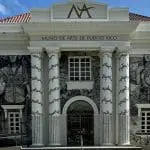 The island’s postwar industrial push, the economic program widely known as Operation Bootstrap, arrived with an architecture to match its ambition. Government buildings, universities, hospitals, and civic halls rose in confident modernist and later brutalist idioms, all bold concrete volumes, deep sun shading fins, and sculptural mass. The landmark of the period is the Museo de Arte de Ponce, designed by the American architect Edward Durell Stone, whose serene hexagonal galleries and floating staircase made it one of the Caribbean’s most admired modern buildings. This layer of the island’s story is increasingly prized rather than overlooked, and its large, well-built civic structures are drawing fresh attention for adaptive reuse.
Why Focus on Architecture?
For visitors, the density is the gift. In a single day you can climb a sixteenth century rampart, lunch under a pastel Criollo balcony, and stand before a modernist masterwork, all within a short drive. Start with our walking routes.
For future residents, these are not museum pieces but living neighborhoods. Historic districts offer shade, walkability, and craftsmanship that new construction rarely matches, along with the practical realities of older buildings. See Living in Puerto Rico for the day-to-day picture.
For investors and preservationists, the island holds a large stock of historic and mid-century structures, many within designated historic zones that carry both protections and, in various periods, restoration incentives. Because those programs and their terms change, confirm current rules through official government sources before committing capital.