Puerto Rico is best understood not as a small island of 3.2 million, but as the heart of a nation of more than 9 million people who carry Borikén with them wherever they go. And that matters a lot – to tourists, expats, and investors alike.
A Nation That Outgrew Its Own Island
Puerto Rican identity is bigger than the island, and that is not a figure of speech. Most people who call themselves Puerto Rican do not live in Puerto Rico. For a traveler, a returning member of the diaspora, or an investor weighing the island’s future, this single fact reframes everything: you are looking at a people whose culture, capital, and connections stretch far beyond the coastline.
About 6.1 million Puerto Ricans live in the 50 states and Washington, D.C., nearly twice the roughly 3.2 million who live on the island itself. The diaspora first outnumbered the island population in 2003, and the gap has widened steadily since. Two forces drove much of that movement: the long economic contraction and debt crisis that ran from 2006 through 2018, and the mass departures that followed Hurricane Maria in 2017.
The mainland communities cluster in two strongholds. The Northeast holds roughly 2.7 million, historically anchored in New York City and spreading through New Jersey, Pennsylvania, and Connecticut. Florida holds about 1.3 million, concentrated in the Orlando to Kissimmee corridor of Central Florida, now the fastest growing Puerto Rican hub in the country. For investors, this is a living bridge: a bilingual, brand loyal customer base that already knows the island’s products, music, and real estate market. For expats, it means you are rarely the first in your circle to make the move, and the return migration of retirees and remote workers is a real and growing trend worth watching.
Identity: Boricua
Boricua, drawn from Borikén, the Taíno name for the island, is the word Puerto Ricans use for themselves whether they were born in San Juan or the Bronx. It signals a cultural identity that survives geography. Island born and mainland born Puerto Ricans alike claim it, and it surfaces everywhere, from reggaeton lyrics to baseball chants to the flags that fly at parades from Chicago to Miami. Understanding Boricua pride is the fastest way for a newcomer to understand the island’s social fabric, and it is on full display in the island’s culture and traditions.
Language and Daily Life
Spanish is the dominant language of daily life, even though English also holds official status. Most islanders are bilingual to varying degrees, with English proficiency generally higher in San Juan, in tourism heavy areas, and among younger generations. Visitors get by comfortably in the metro and resort zones, while expats settling into smaller towns will find that even a modest command of Spanish opens doors quickly.
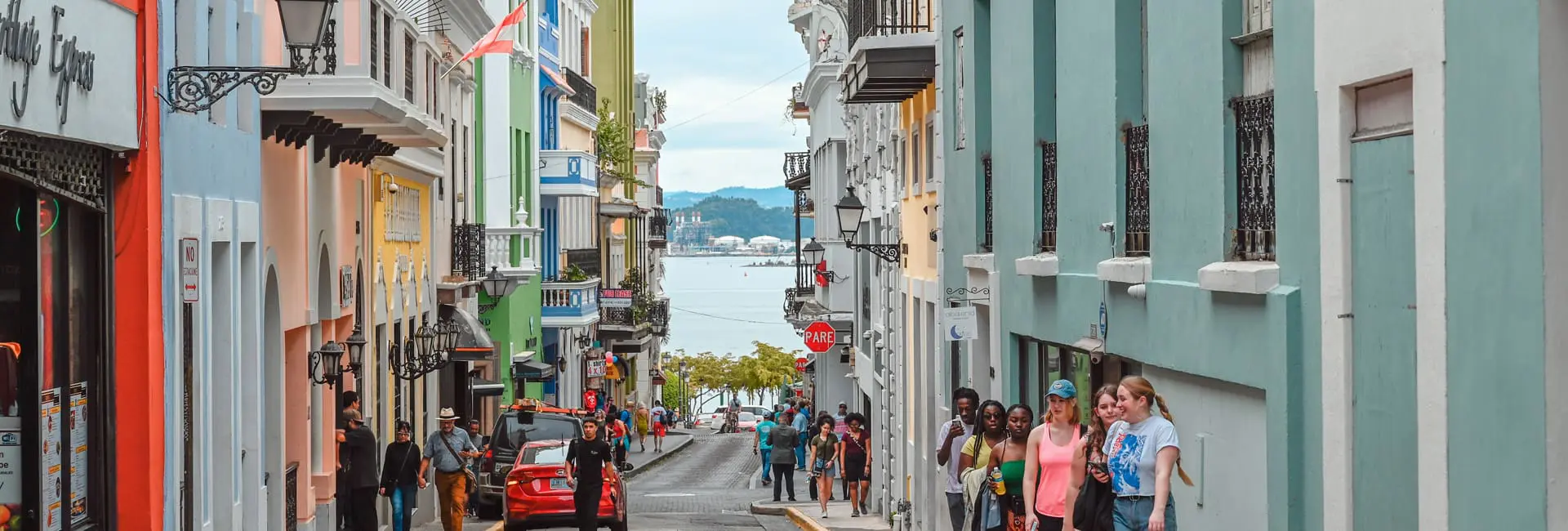
Family sits at the center of Puerto Rican life. Extended family gatherings, multigenerational households, and tight community ties remain the norm outside the largest cities, and the plaza tradition, the town square where neighbors still meet in the evenings, endures across the island’s 78 municipalities. This social density is part of the appeal for retirees and remote professionals: the pace is warmer and more connected than most mainland suburbs, and it shapes the rhythm of daily life more than any statistic can.
Why Does This Matter to You?
Tourists: You are visiting a place where hospitality is cultural, not commercial. The Boricua welcome is genuine, and a few words of Spanish go a long way.
Expats and diaspora: A large, organized community already spans both the island and the mainland, easing relocation, return migration, and the practical logistics of moving to Puerto Rico.
Investors: A combined population of more than 9 million Puerto Ricans, on and off the island, forms a durable, culturally connected market. Read this alongside the island’s tax and incentive programs when modeling long term demand. Visit the Live, Work & Invest in Puerto Rico section of this guide for more information.