
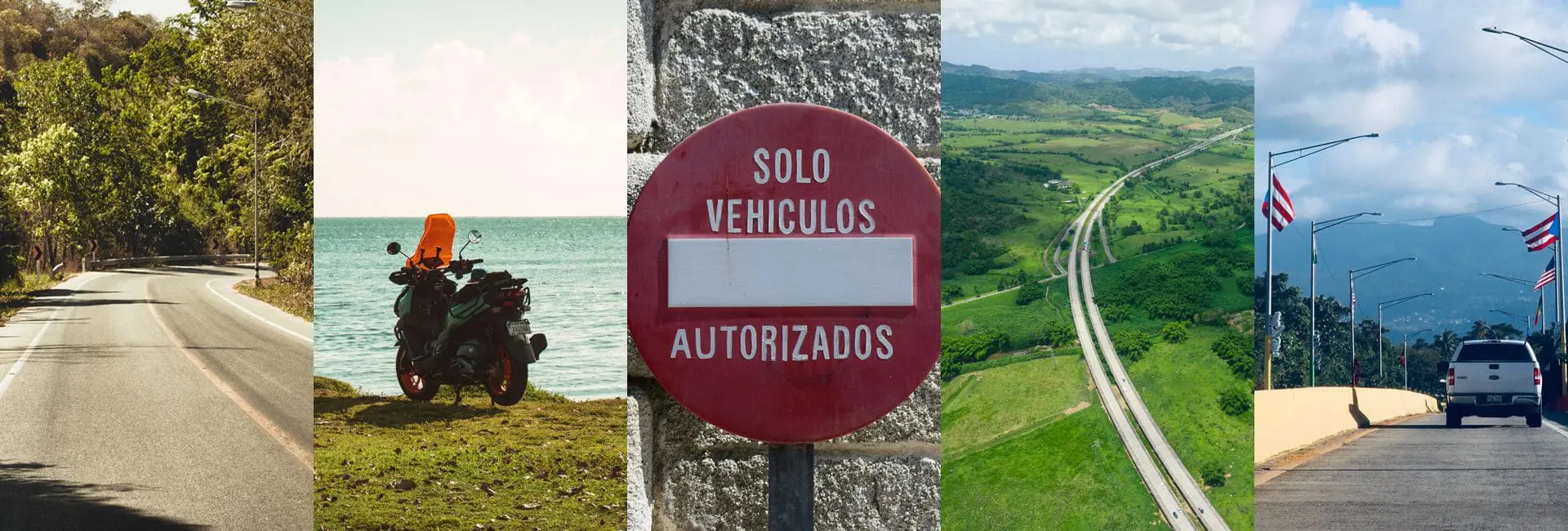
If you can drive on the mainland, you can drive in Puerto Rico. Traffic moves on the right, the signs follow U.S. conventions, and a valid U.S. driver’s license is all you need. The island has one quirk that surprises almost every first-time visitor: distances on road signs are posted in kilometers, but speed limits are posted in miles per hour. Your rental car’s speedometer generally shows both. Because Puerto Rico has specific laws about drinking and driving, be sure to read about blood alcohol levels and drunk driving offenses.
Licenses and Rentals
- A valid driver’s license from any United States state or territory lets you drive right away.
- Visitors from other countries should carry their home license, and an International Driving Permit is recommended, especially if the license is not in English or Spanish.
- The minimum age to rent a car is usually 21, and drivers under 25 often pay a young-driver surcharge.
- Your mainland auto insurance and many credit cards may already cover rentals. Confirm before you decline the rental company’s coverage.
The Rules of the Road
- Speed is measured in miles per hour. Typical limits are 25 to 35 mph in towns and residential areas, about 45 mph on rural roads, and 55 to 65 mph on expressways and highways.
- Distances and exit signs are posted in kilometers.
- Seat belts are required for the driver and every passenger, front and back.
- Children must ride in an appropriate car seat or booster. Rental companies can provide one if you reserve ahead.
- Handheld cell phone use is prohibited. You may use a phone only with a hands-free device.
- A right turn on a red light is allowed after a full stop, unless a sign says otherwise.
- Speed cameras and red-light cameras operate in some areas.
- Toll roads use the AutoExpreso electronic system. Most rental cars come with a transponder, so ask how tolls are billed to avoid surprise fees.
Local Driving Conditions
- Rush hour around San Juan is heavy in both directions. Allow extra time.
- Mountain roads are narrow and winding, with blind curves. Sound your horn on tight bends and take your time.
- Heavy rain can flood roads quickly. Do not cross flooded sections.
- Fuel is sold by the liter, not the gallon, and prices are shown that way.
- Address signage can be sparse in rural areas, so a phone map app is your friend.
Drunk Driving
Puerto Rico enforces its impaired-driving laws strictly. The legal limit is a blood alcohol concentration of 0.08 percent for drivers 21 and older, and 0.02 percent for drivers under 21. A first offense can bring fines, license suspension, and, in serious cases, jail time. There is no safe amount to drink before driving, so if you plan to enjoy the island’s rum and craft beer, arrange a ride. Read more information on the page about alcohol and the drinking age.