 David
If you’re thinking about golf in Puerto Rico, you’re already ahead of most people. This island isn’t just a tropical beach destination. It’s become a legit golf hub in the Caribbean, and there are solid reasons why golfers keep coming back. Let me walk you through what makes Puerto Rico golf worth your time, whether you’re planning a vacation, looking at investment opportunities, or just curious about how the game landed here in the first place. If you want to jump ahead, we have a complete list of the major golf corridors, along with links to course on our Golf page.
The History: How Golf Found Its Way to the Island
 Golf came to Puerto Rico in the early 1900s, brought by American businessmen and military presence. The first real courses showed up around the 1960s and 1970s, but it wasn’t until the 1980s and 1990s that Puerto Rico started developing as a serious golf destination. That’s when major resort developments and private clubs really took off, especially along the north coast.
What’s interesting is that golf in Puerto Rico never became a mass sport for locals the way it is in the mainland US. It stayed more tied to the resort and tourism economy. That’s changed the game here. Instead of competing with packed public courses, Puerto Rico’s golf scene developed around destination golf, resort experiences, and a handful of private memberships. That distinction matters if you’re looking at either playing or investing.
Why Puerto Rico Climate is a Game Changer
Here’s the practical advantage: you can play golf in Puerto Rico year-round. No winters shutting down the course. No seasonal closures. The temperature stays in the mid-70s to low 80s Fahrenheit most of the year, with humidity that varies but rarely makes the game unplayable.
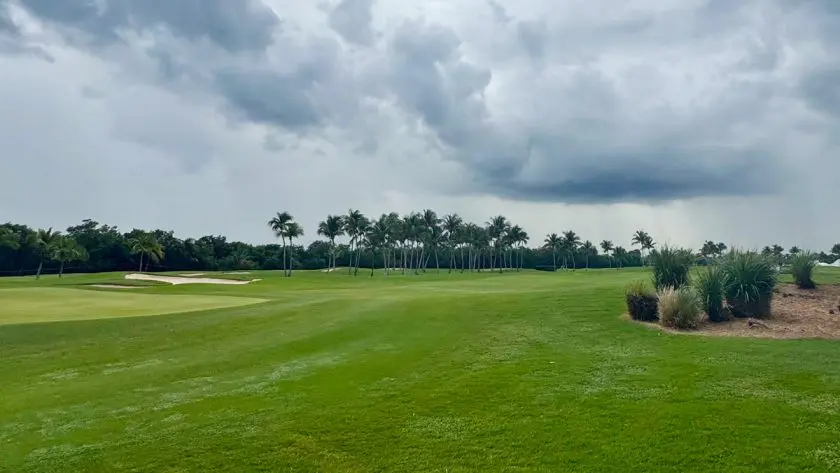
 The rainy season runs from May through November, but that doesn’t mean you can’t play. Rain here usually comes in afternoon bursts. Early morning rounds? Typically, clear. The island’s elevation and topography also mean courses in the interior or elevated regions stay playable even during wet months.
That consistency is huge for resorts and clubs. A golf course in Puerto Rico runs 365 days a year without weather interruptions like you’d see in Florida, Arizona, or California. The grass grows fast in this climate, so maintenance requires focus, but it also means courses can recover quickly from heavy play.
Types of Golf Experiences in Puerto Rico
When you look at Puerto Rico golf courses, you’re essentially dealing with three categories.
Resort Courses are attached to hotels and vacation developments. They’re designed to feel like part of the package. They tend to be well-maintained because the resort depends on the overall experience. Some are open to non-guests for a green fee; others are exclusive to hotel guests. These run the full range from championship-level design to more casual play.
Private Clubs operate on membership, though most allow guest play if you know a member. These are the established places that have been part of Puerto Rico’s golf community for 30, 40, sometimes 50 years. Memberships range from affordable to exclusive.
Semi-Public or Pay-to-Play Courses exist but are less common than you’d see in the mainland. A few courses operate on a model where anyone can book a round for a fee, though pricing reflects the Caribbean resort economy.
What Golfers Actually Need to Know
 Green fees in Puerto Rico run higher than most mainland US courses, but that’s the Caribbean market. You’re paying for the setting, the climate reliability, and the experience of playing in a tropical environment. Prices typically range from moderate resort rates to premium championship pricing, depending on the course and season.
The “golf season” here is less about weather and more about when tourists show up. Winter months, November through March, see the most play and the highest prices. Summer is slower, which means deals if you visit June through September. Course conditions stay solid year-round, though you might notice different grass growth patterns seasonally.
One thing to understand: Puerto Rico golf isn’t competing with places like Scottsdale or Pinehurst on volume. The game here is tied to tourism, resorts, and a smaller local population. That shapes everything from pricing to availability to the overall vibe.
Golf as an Investment Angle
 If you’re looking at Puerto Rico from a development or investment perspective, golf sits at an interesting crossroads. Resort development here has traditionally included golf as an amenity, not a standalone business. That’s changing slightly as the island rebuilds tourism infrastructure post-hurricane damage and as new tourism models develop.
Act 60 tax incentives have brought investment capital to Puerto Rico, and some of that is flowing into hospitality and resort spaces. Golf remains part of that picture, especially for larger resort complexes. The climate advantage and year-round playability make Puerto Rico fundamentally different from seasonal golf destinations.
The Bottom Line
Golf in Puerto Rico works if you understand what you’re getting. You’re not coming here for challenging championship courses you can’t find elsewhere. You’re coming for year-round tropical golf, the Caribbean setting, the reliability of conditions, and the experience that combines the game with a full destination.
Whether you’re a tourist looking for a round during your vacation, an investor evaluating resort properties, or someone trying to understand how Puerto Rico’s tourism economy works, golf is part of the picture. It’s not the biggest part. But it’s been part of the island’s story for over a century, and it shows no sign of disappearing.
