
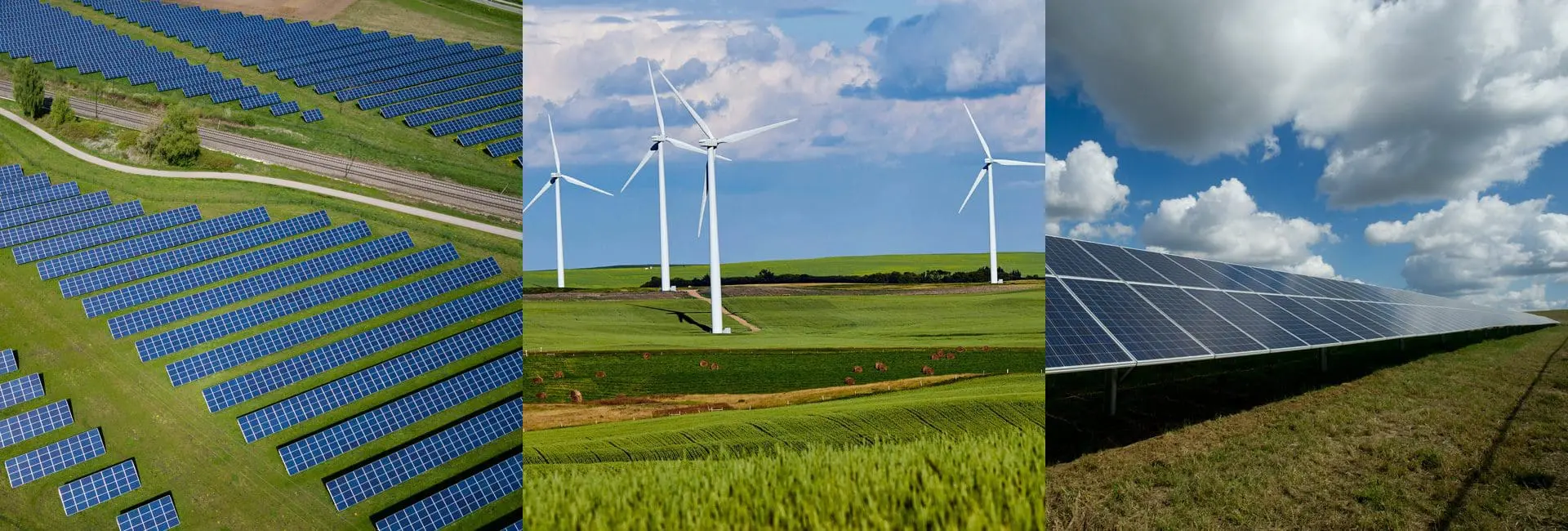
Puerto Rico’s infrastructure is a real consideration for anyone relocating, not a footnote. The power grid remains fragile nine years after Hurricane Maria, split across three operators managing generation, transmission, and distribution separately – a system still facing chronic outages despite a slow renewable energy transition. A ruptured Superaqueduct pipeline cut off water to over 120,000 customers in 2026, part of a broader pattern of water system failures. Meanwhile, federally funded highway and bridge projects are underway but haven’t resolved Metro-area congestion. Budgeting for backup power and water storage, and expecting construction delays on major commuting corridors, are practical planning realities.
The Power Grid
Management of the Power System
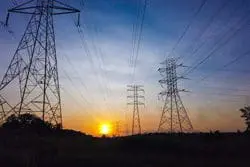 Puerto Rico’s power system splits across three entities, an arrangement put in place after Hurricane Maria exposed how badly the state-owned utility had deteriorated. PREPA (Puerto Rico Electric Power Authority) still owns the island’s generation plants and remains in bankruptcy, carrying roughly $9 billion in bond debt, but it no longer runs day-to-day operations.
Since June 2021, LUMA Energy has operated transmission and distribution – the poles, wires, and substations that carry power from plants to homes – under a 15-year contract. Since 2023, Genera PR (a New Fortress Energy subsidiary) has operated PREPA’s legacy generation plants under a separate 10-year contract. PREPA owns the plants, Genera runs them, LUMA delivers the power.
LUMA’s future is unsettled as of mid-2026: the government issued a formal notice of “persistent noncompliance” in July and is pursuing lawsuits to end the contract early, with a senior official predicting a new operator by year’s end. Nothing is finalized so check for updates before basing any decisions on this information.
Why the Grid Struggles
Puerto Rico’s Energy Bureau chairman has described the system as “suspended between two realities” – building toward a modern grid while still depending on infrastructure that predates Maria by decades. Aging infrastructure, heavy dependence on imported fossil fuel, and chronic underinvestment have made outages much more frequent and with longer duration than in most of the mainland U.S.
In addition, Puerto Rico faced roughly a 33% shortfall between available generation and peak summer demand in 2025, and an island-wide blackout in April 2025 cut power to 1.4 million customers. This directly shapes daily life for residents and is a major reason many households and businesses have installed private solar-plus-battery systems as backup, in addition to portable or permanent generators, regardless of what the grid itself is doing.
The Renewable Transition
Despite the abundance of sun and wind resources, renewables currently only generate less than 3% of the island’s power. Puerto Rico set legal targets of 40% renewable generation by 2025, 60% by 2040, and 100% by 2050 under a 2019 law, later softened by a 2025 law acknowledging reliability can’t depend on renewables alone in the near term. Utility-scale renewable development has lagged those targets – slowed by permitting challenges, land use, and the practicalities of upgrading a hurricane-exposed grid – even as rooftop solar adoption has surged.
PRASA and an Aging System Under Strain
 Puerto Rico’s water and sewer system is run by PRASA (Puerto Rico Aqueduct and Sewer Authority), a public utility facing problems that parallel the power grid’s: decades of deferred maintenance colliding with hurricane damage, chronic underfunding, and now acute failures. In June 2026, the Superaqueduct – a 72-inch pipeline supplying the San Juan metro area – ruptured at three separate points in Bayamón, cutting off reliable water to more than 120,000 customers and prompting the National Guard to deliver emergency drinking water to vulnerable households. Officials attributed it to “decades of deferred maintenance,” worsened by moderate drought conditions and early-season heat driving up demand.
This wasn’t an isolated incident. In July 2025, a 54-inch water main rupture at the Sergio Cuevas treatment plant disrupted service across San Juan, Carolina, and Loíza for days; a separate plant breakdown that same month left more than 183,000 residents without reliable water, some for weeks. Emergency dam repairs at Carraízo in early 2026 forced overnight service halts in San Juan neighborhoods. If you’re evaluating where to live, water reliability is worth researching municipality by municipality, the same way you’d check power reliability.
On the sewage side, PRASA remains under a modified federal consent decree with the EPA (originally 2016, updated 2023) requiring over $1.2 billion in infrastructure investment, including $534 million for 17 new wastewater projects, aimed at reducing sewage overflows and decommissioning outdated treatment plants. Federal recovery funding is also flowing in – $213.4 million from a federal hurricane-relief program is funding Superaqueduct upgrades, an island-wide real-time monitoring system, emergency generators at treatment plants, and dedicated water networks for underserved communities like Salinas. Whether that money reaches its projects on schedule is itself a live issue — a state senator recently said the majority of one funding allocation was still being held up months after approval.
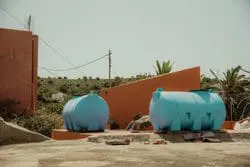
Many households, especially outside the Metro area, keep water storage tanks (cisternas) as standard practice – worth budgeting for if you’re relocating, the same logic as treating a solar-battery backup as standard rather than optional for power.
Highways and Bridges
 Federal transportation grants continue to fund Puerto Rico infrastructure: the island has its own dedicated Puerto Rico Highway Program under the Bipartisan Infrastructure Law, and a 2026 U.S. DOT $1 billion infrastructure grant explicitly included Puerto Rico among its 521 funded projects nationwide.
On the ground, congestion-management construction is actively underway in the San Juan metro area: a reversible congestion-managed toll lane on PR-52/PR-18 between San Juan and Caguas; an ongoing rehabilitation of 18 toll plazas across major metro highways (PR-52, PR-20, PR-66), targeted for substantial completion by early June 2026; and an open-road electronic tolling upgrade on PR-52, PR-53, PR-20, and PR-66. That means stop-and-go traffic and lane closures on the corridors most commuters actually use are a current reality in the Metro region worth factoring in if you’re evaluating commute times, not just home prices.
Practical Guidance for Relocators
Anyone relocating or investing in Puerto Rico property should budget for grid instability. Whatever your view of who’s ultimately responsible, the practical takeaway is the same: budget for outages, and treat a private solar-battery system as increasingly standard infrastructure rather than a luxury, especially outside the Metro area where restoration tends to take longer after outages. The same logic applies to water: many households, especially outside the Metro area, keep water storage tanks (cisternas) as a standard backup rather than an emergency measure, given how often service interruptions make the news. On the roads, expect ongoing construction on major commuting corridors – factor traffic and commute reliability into where you choose to live, alongside home prices.
Refer to information about Real Estate and Act 60 for more guidance.