 David
The Cellist Who Made Puerto Rico His Final Stage
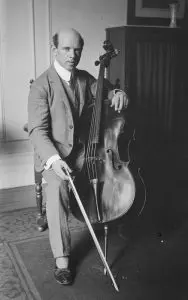 When Pablo Casals stepped off a plane in Puerto Rico in 1956, few people on the island knew they were about to become witnesses to one of classical music’s most transformative decisions. The legendary Catalan cellist, already in his eighties and at the height of his fame, had made the choice to leave Europe and settle in this Caribbean island. What brought him here wasn’t a quest for retirement or beach relaxation. It was something more powerful: a commitment to prove that great art could flourish anywhere, and that Puerto Rico deserved a place at the world’s cultural table.
Casals didn’t arrive as a tourist passing through. He came as someone seeking refuge and purpose, and he found both in ways that permanently shaped Puerto Rico’s cultural identity.
The Man Who Changed His Mind About Exile
For decades, Pablo Casals had refused to perform in countries he felt were politically compromised. He was deeply principled, sometimes stubborn, and unwilling to put his cello before his convictions. By the time he was approaching ninety, most people assumed his performing days were behind him. Instead, he made an unexpected choice: he would move to Puerto Rico, the birthplace of his mother, and restart his life on an island most classical music experts had never associated with serious concert performance.
The decision shocked the classical music world. Here was one of the greatest cellists in history, choosing to base himself not in Berlin, New York, or London, but in San Juan. What most outsiders didn’t understand was that Casals wasn’t retreating. He was investing in something he believed in deeply: the potential of Puerto Rico itself.
Building Something From Scratch
 Once settled in Puerto Rico, Casals didn’t sit quietly in a villa overlooking the Caribbean. He immediately began dreaming bigger. He wanted to create something that would put Puerto Rico on the classical music map: a festival that would draw world-class musicians and introduce serious concert performance to local audiences. In 1957, just a year after arriving, the Casals Festival was born.
The first festival was modest by international standards. But it was revolutionary for Puerto Rico. Casals personally conducted orchestras, performed chamber music, and opened doors to musicians from across the globe. He used his legendary name and credibility to convince world-renowned artists to travel to Puerto Rico, to perform in concert halls that had never hosted such caliber before. Over time, the festival grew from an ambitious local experiment into one of the most prestigious classical music events in the Caribbean and Latin America.
For tourists visiting Puerto Rico today, the Casals Festival remains one of the island’s premier cultural events. If you’re there between late January and early February, you’ll find world-class performances happening throughout San Juan and beyond. The festival pulls serious music lovers from across Latin America and beyond, transforming Old San Juan into a destination for classical music in ways that would have seemed impossible before Casals arrived.
Changing Puerto Rico’s Cultural DNA
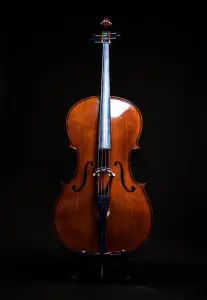 What Casals did go far deeper than simply hosting concerts. He believed Puerto Rico should have its own orchestras, its own trained musicians, its own institutions that could compete globally. He founded the Puerto Rico Symphony Orchestra and invested himself personally in music education on the island. He wasn’t just visiting. He was building infrastructure for a cultural renaissance.
Local musicians suddenly had access to one of history’s greatest cellists willing to teach them, inspire them, and show them what was possible. Young Puerto Ricans interested in classical music no longer had to travel to Europe or the mainland United States to study with masters. Casals brought that opportunity to them. This shift fundamentally changed how Puerto Rico saw itself: as a place where serious culture could happen, where world-class art wasn’t imported from elsewhere but could be created locally.
The Conservatory of Music of Puerto Rico grew stronger because of his influence. Music education on the island developed differently because Casals demonstrated that it mattered, that it deserved investment, that it could produce results that matched anything happening in more established cultural centers.
The Personal Story Behind the Impact
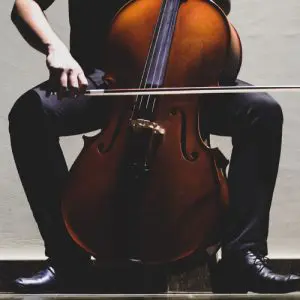 What made Casals different from other celebrated artists who might have visited Puerto Rico was his genuine commitment to the place. He didn’t come for a season and leave. He settled permanently, lived in Puerto Rico for the rest of his life, and made clear decisions about what he valued. He continued performing and recording but always rooted in Puerto Rico. When he was invited to perform at the United Nations in 1961, he chose to debut a Bach composition there, using the world stage to affirm his connection to Puerto Rico and its people.
Visitors to Puerto Rico often discover his story by accident: a plaque in Old San Juan, a reference in a museum, the announcement of the annual Casals Festival. But once you know the story, you see his influence everywhere. It’s in the quality of the local classical music scene. It’s in the pride Puerto Ricans take in their cultural institutions. It’s in the conviction that this island, despite its size, can host world-class art.
His Legacy Today
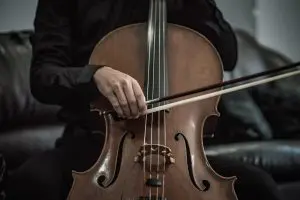 Casals died in 1973, but the festival bearing his name continues to draw thousands of visitors annually to Puerto Rico. Musicians from across the globe still come to perform at venues throughout the island. Young Puerto Rican musicians still train in the institutions he helped strengthen. And travelers who come to Puerto Rico for the culture, not just the beaches, often find themselves drawn to the Casals story as a window into understanding the island’s deeper identity.
What Casals proved was that geography doesn’t determine cultural significance. A Caribbean island can host classical music at the highest levels. Serious art isn’t confined to Europe or major American cities. And sometimes, the most meaningful legacy an artist can leave isn’t just the music they played, but the belief they instilled: that wherever you are, whatever you’re trying to build, it matters.
If you’re exploring Puerto Rico’s cultural side, understanding Pablo Casals is understanding a fundamental part of the island’s modern story. He arrived as an exile and left as the architect of Puerto Rico’s classical music identity. That’s a legacy worth knowing.
