 David
If you want to understand Puerto Rico through a single animal, start with the Paso Fino. This horse was shaped on the island over roughly five centuries, is recognized by law as part of Puerto Rico’s national and cultural heritage, and is still easy for visitors to watch at a fair or ride on a guided trail. Its claim to fame is a smooth, four-beat gait that keeps the rider almost perfectly still in the saddle, which is exactly what you’d want if your job was crossing mountains and cane fields all day.
What Makes the Paso Fino Different
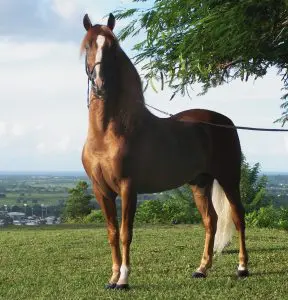 The name translates to “fine step,” and the step is the whole story. Most horses trot, a diagonal two-beat gait that bounces the rider. The Paso Fino instead moves in an evenly spaced, four-beat lateral gait. Each hoof lands separately and in rhythm, and the result is a ride so smooth that breeders traditionally judged a good horse by how little it moved the person on its back.
That gait is natural. The Paso Fino Horse Association notes that foals normally show it from birth, so trainers refine it rather than create it. It comes in three speeds.
Classic fino is the showpiece. Forward movement is very slow, but the hooves strike the ground in an extremely rapid, short, collected rhythm. In competition, horses perform it across a sounding board so judges can hear whether every footfall is even.
Paso corto is the everyday working speed, roughly as fast as a trot, and the gait a well-conditioned horse can hold on the trail for hours.
Paso largo is the extended, fastest version of the same footfall. Depending on the horse, it can approach the speed of a canter or even a gallop without losing that smoothness.
Physically, these are compact horses. Oklahoma State University’s breed reference puts the typical range at 13.2 to 15.2 hands, smaller than many horses mainland riders know. What they lack in height they make up for in stamina and sure footing.
Five Centuries in the Making
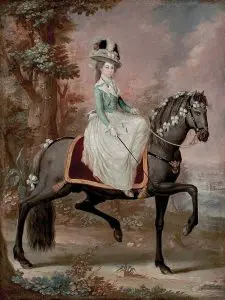 The Paso Fino’s ancestors arrived with Spanish colonists in the early 1500s. Breed historians generally point to a mix of Andalusian, Barb, and the now-extinct Spanish Jennet, the last of which is often credited with passing on the smooth ambling gait. Puerto Rico quickly became a breeding ground, and horses raised here were shipped out to support Spanish campaigns in Mexico, Honduras, and Peru.
Island conditions did the rest. With rugged interior terrain and few good roads, hacienda owners and workers needed a hardy, comfortable horse that could carry a person long distances. Selection for that ride ran for centuries. Paso Fino competitions with prizes were being held in Puerto Rico as early as 1849, and when the United States arrived in 1898, these horses were still central to transportation and farm work.
The modern breed has a clear patriarch. Dulce Sueño, born in Guayama in 1927, is regarded as the most influential sire of the Puerto Rican Paso Fino, and Puerto Rican law describes him as the father and architect of the breed. In 1943 the Federación del Deporte de Caballos de Paso Fino de Puerto Rico formed along with an official breed registry, and a Dulce Sueño grandson, Copita Don Q, won the Federation’s first annual contest that same year.
Science and Law Back Up the Pride
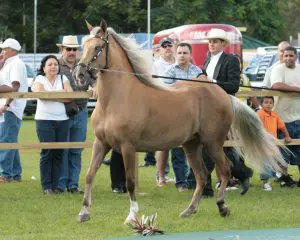 For years, people debated whether the Puerto Rican and Colombian Paso Finos were one breed or two. A genetic study published in Scientific Reports in 2022, involving researchers at the University of Puerto Rico at Mayagüez and Oakland University along with partners in Europe, gave Puerto Rico a strong answer. After analyzing DNA from 200 horses, the team concluded that the Puerto Rican Paso Fino descends from the island’s own Criollo horses, with no genetic contribution from South American gaited breeds. The local Criollo population already carried the DMRT3 “gait keeper” mutation linked to ambling gaits, and generations of Puerto Rican breeders selected from there.
The study also raised the possibility that Puerto Rican Criollo horses contributed to other breeds in the Americas, such as the Peruvian Paso. That’s framed as a suggestion rather than a settled conclusion, so treat it that way.
Lawmakers moved quickly. Law 34 of 2023 declared the Paso Fino breed part of Puerto Rico’s national and cultural heritage, and a 2024 law established an annual Día Nacional del Paso Fino. Those sit on top of an older framework: the Paso Fino agro-industry law of 1988 and its later amendments, under which no horse in Puerto Rico can be advertised as a Puerto Rican Paso Fino unless it is properly registered.
Puerto Rican Versus Colombian Paso Fino
If you shop or show in the mainland United States, you’ll notice the term “Paso Fino” covers more than one population. The Paso Fino Horse Association, founded in 1972, registers horses of Puerto Rican and Colombian lines plus crosses between them. The Puerto Rican horse is prized for a delicate, fine step, while Colombian horses tend toward a quicker, piston-like action, and some Colombian horses perform the trocha, a gait not found in the Puerto Rican breed. Purists on the island and in groups like the Pure Puerto Rican Paso Fino Federation of America keep the Puerto Rican line separate. Both camps have their reasons, but buyers should know which one they’re looking at.
Where Visitors Can See and Ride Paso Finos
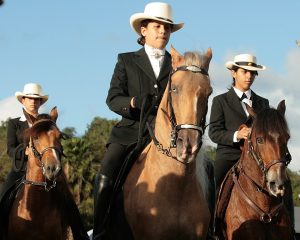 The signature spectator event is the Feria Dulce Sueño, held in Guayama. A 2003 law set the first weekend of March as its annual date, and the fair honors the stallion in the town where he was born. Expect bellas formas judging, where horses are shown in hand for conformation, classic fino classes on the sounding board, and a crowd that takes its horses seriously.
Other events fill out the calendar. Municipal festivals such as Trujillo Alto’s Paso Fino fair and the Festival del Caballo de Paso Fino in Las Marías appear in island event listings, and Arecibo hosted the 36th Campeonato Internacional de Paso Fino Félix Santiago Oliver in December 2025. That show, organized by the breeders association known as Los Abiertos, drew more than 400 horses with delegations from Puerto Rico, the United States, the Dominican Republic, and Colombia. Dates shift from year to year, so confirm with organizers before planning a trip around any of them.
If you’d rather ride, two well-established outfitters use Paso horses. Tropical Trail Rides in Isabela runs two-hour beach and forest rides starting at Shacks Beach on the northwest coast. Carabalí Rainforest Adventure Park, near Luquillo on the edge of El Yunque National Forest, offers rides in the rainforest foothills along the Mameyes River and a longer ride out to Luquillo Beach.
Know the trade-offs before you book. Third-party booking sites recently listed Tropical Trail Rides at about $107 per adult and the Carabalí beach ride at about $164, and both listings described sales as final, with no refunds for cancellations. Weight limits apply: Carabalí’s beach ride lists 235 pounds, and Tropical Trail Rides has listed 250. The Carabalí beach ride also has a minimum age of 12. Wear long pants and closed shoes, and check current rules and prices directly with the operator.
The Ownership and Investment Angle
For anyone thinking about breeding, buying, or building a business around these horses, the opportunity is real but narrow. The breed has a dedicated competition circuit, protected heritage status, and steady interest from equestrian tourism. It also has a small, specialized market, and the value of a horse depends heavily on bloodlines, gait quality, and registration paperwork.
That registration point matters most. Because Puerto Rican law restricts who can market a horse as a Puerto Rican Paso Fino, buyers should verify papers through the recognized registry before any money changes hands. Ongoing costs for feed, farrier work, vet care, training, and land apply here like anywhere else, and the island’s hurricane season means planning ahead for shelter and animal safety. Talk to established breeders and an equine veterinarian on the island before committing.
Why the Paso Fino Matters to Puerto Rico
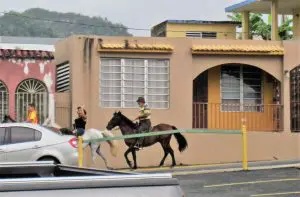 The Paso Fino is one of the few things on the island that was both raised here and shaped entirely by the people who lived here. It carried farmers to market, competed for prizes in the 1800s, gave the island its most celebrated stallion, and now has DNA evidence and heritage law standing behind it. Whether you watch a classic fino tap across the board in Guayama or ride a corto down a beach in Isabela, you’re seeing a living piece of Puerto Rican history.
