
 David
David Why These Mountain Beans Changed Everything
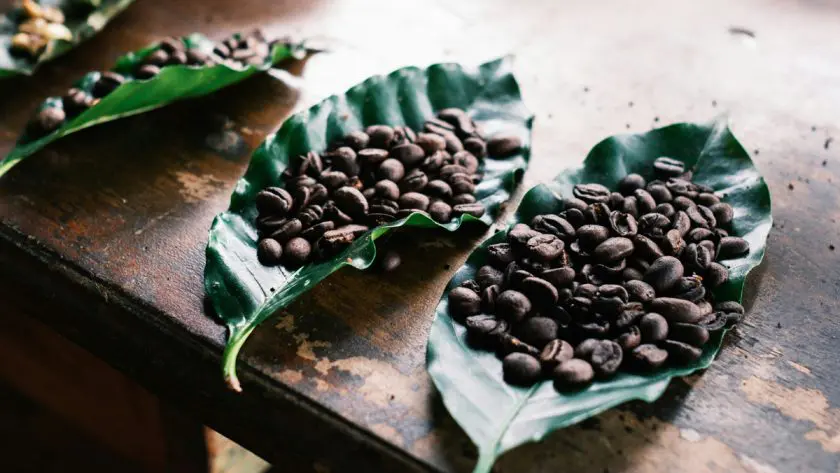
When I first sipped coffee from Puerto Rico, I understood why farmers here refused to quit. The smoothness hit first: no bitterness, just clean, balanced flavor that somehow tasted like the mountains themselves. That’s not poetry. That’s what happens when volcanic soil, the right altitude, and three generations of knowing exactly what they’re doing come together.
Most people don’t realize Puerto Rican coffee nearly disappeared. By the 1970s, hurricanes and cheap imports had gutted the industry. The mountains sat quiet. But something stubborn survived in the families who stayed: a commitment to quality over quantity that transformed near-extinction into a legacy worth protecting.
What Makes Puerto Rican Coffee Different From Every Other Origin
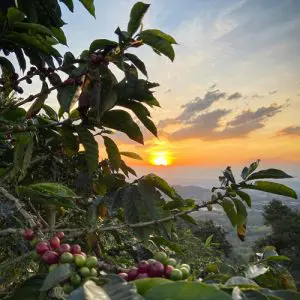 You can taste the difference immediately. Puerto Rican coffees are smooth in a way that Brazilian or Central American beans simply aren’t. The reason sits beneath your feet: volcanic soil that concentrates minerals and creates complexity. The elevation helps. These mountains hover right at that sweet spot between 2,000 and 4,000 feet where coffee develops character instead of just caffeine.
But the real difference is human. These aren’t industrial operations. A Puerto Rican coffee farm isn’t measured in thousands of acres. Most growers work 5 to 50 cuerdas (roughly 2 to 20 acres), which means they know every plant. They see which slopes get afternoon shade. They taste the coffee while it’s still processing. You can’t do that at scale, and frankly, they don’t want to.
The revival started in the 1990s when younger farmers realized the world was done with cheap, mass-produced coffee. People wanted to know where their beans came from. They wanted story. Puerto Rico had nothing but story, and suddenly that became the most valuable thing on the market.
Where Puerto Rican Coffee Actually Grows
The Mountains That Matter: Jayuya, Maricao, and Utuado
Drive into the central mountains and you’ll see why coffee chose here. The Cordillera Central spine runs down the island’s middle, peaks rising over 4,000 feet, creating their own weather system. Trade winds cool the plants. Afternoon clouds prevent sun scald. The rainfall pattern is almost perfect: heavy in summer when the plants need it, lighter during harvest so the beans dry evenly.
 Jayuya sits at the heart of it all. The name comes from Taíno heritage, and the landscape carries that history. The altitude works. The microclimate works. Walk through a Jayuya hacienda during harvest and you’ll see why this place became synonymous with Puerto Rican coffee excellence.
Maricao took a different path. The industry nearly died here completely. Then in the 1990s, growers collectively decided: we’re going premium. They invested in processing equipment. They protected shade canopy in the Bosque Estatal de Maricao. They connected directly with roasters and specialty importers worldwide. Today, Maricao coffee commands prices that would’ve seemed insane 30 years ago.
Utuado, the historical heart of production, still grows serious coffee. The municipality sits at elevation, with conditions that create beans with body and complexity. Walk into a café in San Juan serving Utuado coffee and you’re drinking agricultural archaeology. This is what the island’s coffee tradition tastes like.
The Farms Keeping This Tradition Alive
Hand-Picked Excellence in the Mountains
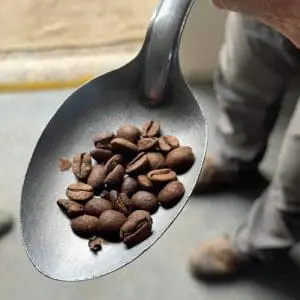 Hand-picking seems inefficient until you understand the terrain. These mountains are steep. Machines can’t navigate. More importantly, hand-picking lets you select only the ripest cherries. A single tree will be picked multiple times as different cherries reach peak ripeness. That’s labor-intensive. It’s also why the coffee tastes the way it does.
A typical harvest day involves workers moving through the shade-grown coffee, filling collection bags, developing the sort of speed and accuracy that comes from experience. Experienced pickers know ripeness by touch. They work fast. They understand they’re handling the foundation of the farm’s reputation.
Most Puerto Rican farms employ seasonal workers from other Caribbean islands who return year after year. It’s skilled work, not casual labor. The knowledge transfers through relationships that span decades.
Processing: Where the Real Work Happens
Here’s what separates exceptional coffee from good coffee: processing method and attention to detail.
Most Puerto Rican coffee uses the washed process, the traditional method that dominates the island. Cherries arrive at the hacienda and get depulped that day. They ferment in large tanks for 12 to 48 hours depending on the farmer’s technique (and here’s where family knowledge matters). Then they’re washed and spread on raised beds to dry, turned regularly, moved to covered storage if rain threatens.
The best haciendas treat this like an art form. One family might ferment for exactly 36 hours. Another will ferment longer for more complexity. One might dry slowly over three weeks. Another accelerates the process for brightness. These small choices, repeated over decades, create recognizable flavor signatures.
A few pioneering farms are experimenting with natural (dry) process, letting the whole cherry dry with fruit intact for fruitier, more complex profiles. It’s risky in the tropics where mold is always a threat, but the best experiments are producing remarkable coffee.
The Harvest Season: When the Mountains Come Alive
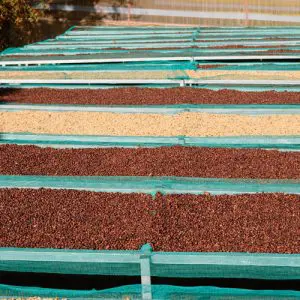 October through February, these mountains are alive with activity. The white coffee blossoms have become precious beans, now deep burgundy and ready for harvest.
There’s a rhythm to it. Pickers move through plants selecting ripe cherries. Hacienda workers receive the harvest and begin processing immediately. Washed coffees hit the depulper that afternoon, natural process coffees go straight to drying beds. Farmers turn beans by hand or with simple rakes, watching for even drying, adjusting for weather.
By March, most coffees have dried to the right moisture level. They’re moved to storage, allowed to rest, then eventually hulled to remove the parchment layer and expose the green bean underneath. That green bean is what gets exported to roasters worldwide.
The season is peak activity for haciendas, but it’s also when visitors can actually experience coffee farming. October through February, you can visit farms in Jayuya, Maricao, and Utuado, see harvest in action, talk to farmers, and buy coffee picked that morning.
What You’re Actually Tasting
 Puerto Rican coffee doesn’t announce itself loudly. There’s no heavy body masking underdeveloped flavors. There’s no sharp acidity because the processing is careful. Instead, you get:
- Smoothness that develops in the mouth without becoming heavy
- Bright but balanced acidity that tastes almost like wine
- Sweet finish that emerges as the cup cools
- Subtle complexity: chocolate, sometimes citrus or spice, but never overpoweringBrew it simply. Pour-over. Automatic drip. French press. The beans are usually roasted light to medium, which means they deserve coffee equipment that doesn’t add bitterness. You’re tasting what those mountains created.
The Future of Puerto Rican Coffee
These mountains aren’t giving up. The industry faces real challenges. Climate change means unpredictable rainfall and hurricane season feels more dangerous. But Puerto Rican farmers are investing in sustainable practices because they’re thinking in generations, not quarters.
Shade-grown systems protect the coffee and create habitat. Water management captures mountain rainfall. Organic fertilizers rebuild soil. The farms are smaller, slower, and more expensive to operate than industrial competitors. They have to be, because that’s how you create coffee worth buying at premium prices.
The families stewarding these mountains understand they’re not competing on volume. Brazil produces more coffee in a week than Puerto Rico does in a year. Puerto Rico competes on something else: knowing exactly where every bean came from, which farmer grew it, what altitude, what processing method, what the story is.
That story is written in volcanic soil and mountain mist. It’s survived extinction once already. It’s not going anywhere.
Ready to taste Puerto Rican coffee? The harvest season runs October through February, the best time to visit the mountain towns and coffee haciendas. Order online from growers directly or seek out specialty roasters carrying single-origin Puerto Rican beans. Once you taste it, you’ll understand why farmers here refused to quit.
